

Resolve the issues, gaps and opportunities of integrated aviation management automated eco-systems

HYATT PLACE Phoenix, 3535 W. Chandler Blvd, Chandler AZ 85226
Sept 24, 2026
8:00 - 17:45 (MST)
Event Pass

$2,499.00

$ 1999

Who should attend
Senior aviation leaders managing supply chain volatility, cost pressure, and capacity constraints while protecting reliability and operational stability within increasingly integrated and AI-enabled aviation management ecosystems.

Short intro
This one-day ClosedDoor Exchange is a confidential, invitationonly executive forum where leaders speak candidly about failures, risks, political pressures, and strategic dilemmas they cannot discuss publicly or even with their own teams.

Why it matters: Executives increasingly face decisions shaped by AI, geopolitics, and crossfunctional dependencies. Closeddoor exchanges allow them to surface the real issues – governance gaps, adoption failures, decisionrights confusion, and organizational readiness constraints.

5 benefits (why attend)

  • Improve operational predictability through stronger supply chain planning and integrated digital systems
  • Reduce cost leakage from disruptions, AOG events, and inefficient processes across aviation operations
  • Increase capacity confidence with better planning, escalation, and system-wide coordination
  • Strengthen resilience with practical strategies across interconnected aviation ecosystems
  • Gain clarity on where to focus resources for maximum operational impact

5 key takeaways

  • A prioritisation model for managing supply chain constraints in integrated aviation systems
  • Practical methods to reduce parts volatility and lead time risk using digital tools
  • Leadership approaches to balancing cost, reliability, and operational pressure
  • A resilience framework linking planning, maintenance, operations, and automation systems
  • A blueprint for stabilising performance across capacity, cost, and readiness
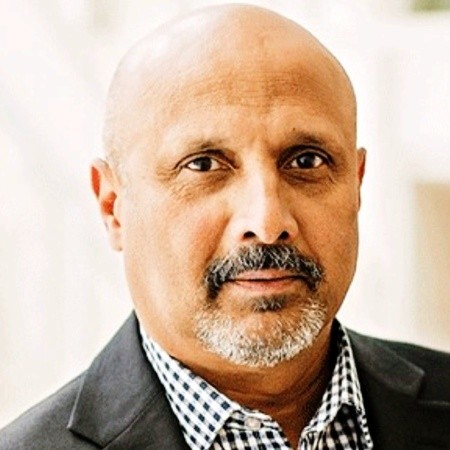
Keynote Speaker

Dave Gajadhar

Senior Business Advisor | Regulated Industries | Strategy, Sustainability, Policy Modernization & Operational Effectiveness

Event Agenda

8:00 - 8:30
Arrival, networking & strategic framing
  •  Where does automation outperform your people and where does it quietly undermine them?
  • The Determinism Decade timeline

Workshop Blueprint:
Resolving Issues, Gaps & Opportunities in Integrated Aviation Management Automated Ecosystems.

Purpose:
This workshop is designed to identify systemic issues, integration gaps, and automation opportunities within aviation management ecosystems.

To identify, analyze, and prioritize the issues, gaps, and opportunities within an automated aviation management ecosystem, and to co create solutions that improve safety, efficiency, interoperability, and user experience.

8:30 - 09:00
Opening: Aviation’s determinism and germination decade

Automation is accelerating. The human system is not.

Setting the stakes: safety, predictability, resilience, and financial performance now depend on closing the human – automation gap.

Key themes:

  • Automation drift and decision‑integrity erosion
  • The new economics of human‑machine alignment
  • Why governance – not technology – is the real bottleneck

Overview of the current integrated ecosystem

Key trends: automation, AI, predictive ops, digital twins, UTM/ATM convergence.

09:00 - 10:00
Session 1: Mapping the human automation gap across the value chain

A structured walkthrough of the full aviation operations chain: Planning Dispatch Maintenance Ramp Communications Safety Compliance Participant Experience

Participants identify:

  • Where automation creates blind spots
  • Where humans create variability
  • Where governance creates friction
  • Where cross‑chain coordination breaks down

Output: A heat map of automation risk zones for each participant’s organization.

10:00 - 10:15
Break & executive dialogue
  • Where is your automation over‑trusted?
  • Where is your workforce under‑supported?
10:15 - 11:30
Session 2: Human-in-the-loop decision integrity

A deep dive into the decision pathways that matter most.

Core components:

  • The failure modes of human‑automation interaction
  • Drift, over‑reliance, and silent system bias
  • How fatigue, workload, and cognitive overload distort automation outcomes
  • The “Decision Integrity Stack” for aviation operations

Exercise: Teams reconstruct a real operational decision and identify where automation helped, hindered, or misled.

11.30 - 12.15
Executive roundtable: Governance, accountability & cross chain coordination

A facilitated conversation on:

  • Why governance models lag behind automation
  • How siloed decision rights create operational chaos
  • What regulators now expect from advanced automation programs
  • How to build trust between operators, OEMs, and regulators

Output: A governance‑readiness scorecard.

12.15 - 13.15
Working lunch – The automation futures briefing

A curated, high signal lunch session covering:

  • Emerging automation and AI tools entering aviation
  • What’s real, what’s hype, and what’s coming fast
  • The economics of automation adoption
  • Workforce implications and leadership responsibilities

Roadmap & Governance (60 min)

Create a unified roadmap:

Short Term (0–6 months)
Mid Term (6–18 months)
Long Term (18+ months)

Define governance:

  • Who owns what
  • How decisions are made
  • How data is shared
  • How automation is validated
13.15 - 14.30
Session 3: Cross functional operating models for predictability

This session builds the operating model that closes the gap.

Key frameworks:

  • The Integrated Operations Spine
  • The Predictability Loop
  • The Human‑Automation Synchronization Model
  • The 7 Levers of Operational Friction Reduction

Exercise: Participants redesign one cross‑chain workflow (e.g., dispatch‑maintenance‑ramp) using the new model.

14.30 - 14.45
Break & scenario reset
14.45 - 16.00
Session 4: Scenario lab - automation under stress

An operational simulation where automation, humans, and governance collide.

Participants work through a high‑pressure scenario involving:

  • Conflicting automation outputs
  • Fatigue‑driven human decisions
  • Cross‑chain communication breakdown
  • Regulatory oversight
  • Time‑compressed operational risk

Opportunity Mapping (60 min)

Participants identify opportunities such as:

  • Predictive maintenance automation
  • AI driven gate allocation
  • Integrated turnaround management
  • Digital twin-based airport operations
  • Automated irregular operations (IROPS) response
  • Seamless airline – airport -ATC data exchange

Use a value vs. feasibility matrix to prioritize.

Outcome: Leaders learn how to stabilize operations when automation behaves unpredictably or when humans misinterpret automated cues.

16.00 - 17.00
Session 5: Turning automation investments into financial & operational returns

A hard‑nosed executive session on value creation.

Topics:

  • Quantifying automation drift costs
  • Reducing maintenance and dispatch delays
  • Increasing aircraft utilization
  • Reducing training waste
  • Improving safety case strength
  • Workforce retention through cognitive load reduction
  • Strengthening regulator – operator trust

Issue & Gap Discovery (20 min)

Breakout groups identify issues across these domains:

           Operational Gaps

  • Poor data flow between airline ops and airport ops
  • Manual overrides causing delays
  • Lack of real time situational awarenessTechnical Gaps
  • Legacy systems not interoperable, • API inconsistencies, • Data latency or quality issues

           Human Factors

  • Training gaps for automated systems, • Over reliance on manual workarounds
  • Resistance to automation

            Regulatory & Compliance

  • Unclear standards for automated decision making

           Cybersecurity vulnerabilities

• Data sharing restrictions

Groups document:

  • Impact severity
  • Frequency
  • Root causes

Output: A personalized ROI roadmap for each participant.

17.00 - 17.30
Executive synthesis: The 90 day acceleration plan

Homework Assignment: Participants build a 90‑day plan with:

  • 3 automation‑risk zones to eliminate
  • 3 decision‑integrity pathways to strengthen
  • 3 governance upgrades to implement
  • 3 cross‑chain coordination improvements to deploy

Teams design solutions using a structured canvas:

  • Problem statement
  • Stakeholders affected
  • Proposed automated/AI enabled solution
  • Required integrations
  • Risks & mitigations
  • Expected ROI (operational, financial, safety)
  • Implementation roadmap

Expected Outcomes

  • A clear map of issues and gaps
  • Prioritized opportunities with business cases
  • Cross functional alignment
  • A realistic implementation roadmap
  • Defined governance for the automated ecosystem
  • Increased trust between stakeholders

Optional Add Ons (time permitting)

  • Simulation of disruptions (weather, IROPS, equipment failure)
  • Vendor demos of automation tools
  • Cybersecurity tabletop exercise
17.30 - 17.45
Closing: The human advantage in an automated future

A cinematic close reinforcing:

  • Why judgment is the last competitive advantage
  • Why automation without governance is fragility
  • Why leaders must synchronize people, processes, and machines
  • Why the next decade belongs to organizations that close the gap now
17.45
Executive networking & optional 1:1 consultations

Register for this event

Secure your place at this exclusive event
Group Discount

Book 3+ spaces and save 20% or more. Multi-buy pricing starts at $1,999 per seat.

Expert-Led Content

Led by senior industry advisors with decades of aviation industry experience.

Why Leaders Hive?

Trusted by aviation leaders worldwide for curated, high-impact development events.

Dedicated Support

Our team is available to help with group bookings, and any special requirements.

Scroll to Top