
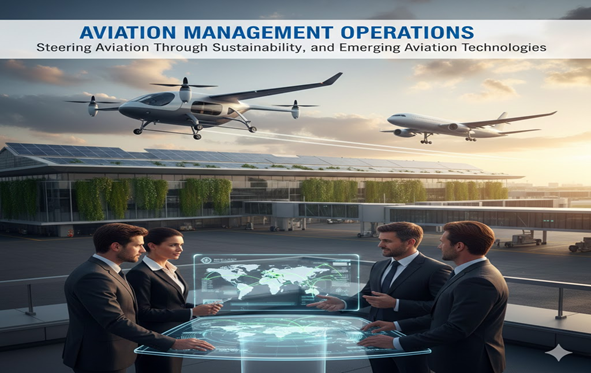
Aviation Horizons
Author: Dave Gajadhar
Leaders-Hive.com
February Edition 3
Steering Aviation Through Sustainability, Automation, and Emerging Technologies**
From the Editor Dave Gajadhar
Aviation is entering one of the most transformative eras since the dawn of jet travel. Sustainability pressures, rapid automation, and breakthrough technologies are converging to redefine how aircraft are built, flown, and supported. This issue explores the innovations reshaping the skies — and what they mean for operators, regulators, and travelers.
Sustainability Takes Center Stage
Decarbonizing Flight
Airlines and manufacturers are accelerating efforts to reduce emissions across the entire aviation lifecycle. Key developments include:
- Sustainable Aviation Fuel (SAF) scaling through new production pathways such as power‑to‑liquid and biomass gasification.
- Hydrogen propulsion gaining traction, with multiple demonstrator aircraft targeting commercial entry in the 2030s.
- Electric and hybrid‑electric aircraft emerging for regional and commuter markets, promising quieter, cleaner operations.
Greener Airports
Airports are becoming testbeds for sustainability:
- Electrified ground support equipment
- Solar‑powered terminals
- Advanced waste‑to‑energy systems
- Smart building management to reduce energy consumption
The industry is moving from incremental improvements to systemic change
Automation: The New Co‑Pilot
Next‑Gen Flight Decks
Automation is evolving beyond traditional autopilot systems. Modern cockpits now integrate:
- AI‑assisted decision support for weather, routing, and fuel optimization
- Enhanced vision systems improving situational awareness
- Predictive maintenance analytics reducing downtime and improving safety
Single‑Pilot and Autonomous Operations
Cargo operators are leading the charge toward reduced‑crew and autonomous flight. While passenger adoption will take longer, the groundwork is being laid through:
- Advanced detect‑and‑avoid systems
- Digital flight rules for autonomous aircraft
- Regulatory frameworks for remotely piloted operations
Automation is not replacing pilots — it’s reshaping their role into one of oversight, systems management, and mission leadership.
🚀 Emerging Technologies Reshaping the Industry
Urban Air Mobility (UAM)
Electric vertical takeoff and landing (eVTOL) aircraft are moving from prototypes to certification programs. These vehicles promise:
- Short‑range, on‑demand urban transport
- Reduced congestion
- Lower noise footprints
Cities worldwide are planning vertiports and air‑traffic integration strategies.
Advanced Materials and Manufacturing
Breakthroughs include:
- 3D‑printed structural components reducing weight and cost
- Composite materials improving fuel efficiency
- Digital twins enabling real‑time simulation and lifecycle optimization
Space‑Adjacent Aviation
High‑altitude platforms and suborbital vehicles are blurring the line between aviation and spaceflight, opening new opportunities in:
- Ultra‑fast travel
- Earth observation
- Communications
As we move through 2026, the aviation management operations industry is undergoing a profound transformation. The focus has shifted from “future concepts” to the deployment of integrated, data-driven ecosystems that prioritize efficiency, sustainability, and a frictionless passenger journey.
Here are the key emerging technologies reshaping the industry today:
1. AI-Powered “Decision Intelligence”
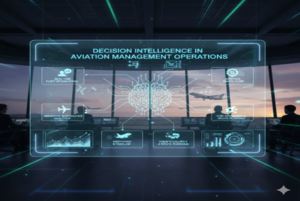
Artificial Intelligence has evolved from a backend tool to a collaborative “copilot” for aviation professionals.
Predictive Maintenance: Using real-time sensor data and machine learning, airlines are flagging component failures weeks in advance. This has reduced unplanned downtime by up to 30%.
Dynamic Turnaround Management: Computer vision and apron-mounted cameras monitor tasks like refueling and baggage loading in real-time. AI models now predict departure readiness and flag potential delays before they escalate.
Crew Optimization: AI tools like the “JAL-AI Report” help crew members automate post-flight documentation, reducing administrative tasks from 60 minutes to just 20.
2. Digital Twins and Virtual Simulation
Airports and airlines are increasingly using Digital Twins—virtual replicas of physical assets—to optimize operations without disrupting live traffic.
Baggage Flow Optimization: Airports like Heathrow and Changi use digital twins of their baggage handling systems (BHS) to run “what-if” scenarios, identifying bottlenecks and testing new routing strategies virtually.
Resource Modeling: Management can simulate passenger flow through terminals to determine the ideal staffing levels for security checkpoints and boarding gates in real-time.
3. Biometric and Contactless “Single Tokens”
The goal for 2026 is a “hands-free” airport experience where your face is your passport.
Digital Travel Credentials (DTC): Developed by ICAO, these allow passengers to verify identity without physical documents.
Biometric eGates: Major hubs, including Miami (MIA) and Atlanta (ATL), have deployed biometric boarding and security gates. Nearly 50% of global airports aim to have these systems fully integrated by the end of 2026.
4. Autonomous Ground Handling and Cargo
Labor shortages and the need for precision have accelerated the adoption of robotics on the airfield.
Autonomous Tractors: Changi Airport recently deployed its first fleet of fully driverless tractors for baggage and cargo movement. By 2027, this fleet is expected to triple in size.
Inspection Drones: Exterior aircraft checks that used to take 10 hours of manual labor are now completed in 20 minutes using automated drone platforms equipped with high-resolution sensors.
Autonomous Cargo Aircraft: The market for unmanned cargo drones is surging, particularly for middle-mile logistics and e-commerce, with payload capacities now reaching $150\text{ kg}$ for standard regional routes.
5. Sustainable Operations Technology
Sustainability is no longer just about fuel; it is now built into operational management.
Smart Energy Hubs: Airports are transforming into microgrids, using IoT and AI to manage solar energy, battery storage, and real-time energy consumption in terminals.
SAF Logistics: Management systems are being redesigned to handle the “Drop-in” integration of Sustainable Aviation Fuel (SAF), which can reduce lifecycle $CO_2$ emissions by up to 80%.
Summary of Impact
| Technology | Core Benefit | 2026 Status |
| Generative AI | Admin automation & predictive analytics | High Adoption |
| Digital Twins | Operational “What-if” testing | Scaling |
| Biometrics | Seamless “Paperless” travel | Mainstream |
| Autonomous EVs | Airside efficiency & safety | Early Deployment |
The Digital Backbone: Data, Connectivity, and Cybersecurity
As aircraft become more connected, data becomes the new fuel. Key trends:
- Real‑time aircraft health monitoring
- Cloud‑based fleet management
- Cyber‑resilient avionics architectures
- 5G‑enabled airport operations
Digital transformation is no longer optional — it’s foundational.
What This Means for the Future of Aviation
The convergence of sustainability, automation, and emerging technologies is creating an aviation ecosystem that is:
Cleaner through low‑carbon propulsion and efficient operations
Smarter through AI‑driven decision‑making and predictive systems
More connected through digital infrastructure and integrated air mobility
More accessible through new aircraft types and mobility models
The next decade will redefine what it means to fly — and the organizations that embrace innovation early will lead the industry forward.
Aviation Horizons
Strategic Insights on Sustainability, Automation, and Emerging Technologies**
Aviation is undergoing a structural transformation driven by sustainability mandates, workforce pressures, and rapid technological acceleration. For leaders across airlines, OEMs, MROs, airports, and regulatory bodies, the next decade will redefine competitive positioning. This edition distills the trends shaping capital allocation, operational strategy, and long‑term resilience.
🌱 Sustainability as a Strategic Imperative
Decarbonization: From Compliance to Competitive Advantage
Sustainability is no longer a CSR initiative — it’s a board‑level priority influencing fleet planning, investor relations, and market access.
Key developments influencing executive decision‑making:
Sustainable Aviation Fuel (SAF) adoption is accelerating, with governments introducing blending mandates and incentives. Early movers are securing supply contracts that will become scarce.
Hydrogen propulsion is progressing from concept to roadmap, with OEMs targeting commercial viability in the 2030s. Infrastructure planning must begin now to avoid future bottlenecks.
Electric and hybrid‑electric aircraft are reshaping regional mobility economics, offering lower operating costs and new route viability.
Airport Sustainability and Infrastructure Modernization
Airports are transitioning into energy‑efficient, digitally optimized hubs:
Electrified ground operations
Renewable‑powered terminals
Smart infrastructure for real‑time energy management
For executives, the question is shifting from “Should we invest?” to “How fast can we scale?”
Automation: Redefining Workforce and Operational Models
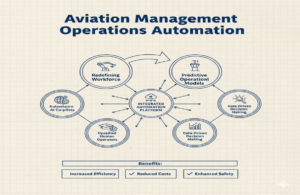
Flight Deck Evolution
Automation is expanding the role of pilots from manual operators to mission managers. Key technologies include:
AI‑driven decision support for fuel, routing, and weather optimization
Predictive maintenance reducing AOG events and improving asset utilization
Enhanced vision and sensing systems improving safety margins
These advancements are reshaping training requirements, crew resource management, and long‑term workforce planning.
Reduced‑Crew and Autonomous Operations
Cargo carriers are leading adoption, but passenger operations will follow as regulatory frameworks mature.
Strategic implications:
Lower operating costs
Increased schedule flexibility
New business models for regional and remote operations
Executives should monitor certification pathways and begin scenario planning for mixed‑crew fleets.
🚀 Emerging Technologies Transforming Aviation
Urban Air Mobility (UAM)
eVTOL platforms are approaching certification, backed by major OEMs and mobility providers.
Opportunities for industry
Final Thoughts
Aviation’s transformation is not a distant vision; it’s unfolding now. Whether you’re an operator, engineer, policymaker, or enthusiast, staying ahead of these shifts is essential. The sky is no longer the limit — it’s the launchpad for the next generation of flight.

Contact us for more information on our workshops near you at https://leaders-hive.com/contact/